RV Maintenance: Complete Service Timeline Guide
RV Maintenance, Preventative Care, Service Schedules
How Often Should You Service Your RV? A Complete Maintenance Timeline for Owners
Your RV is more than a vehicle—it’s a rolling home and a major investment. Understanding how often to service it, what to inspect, and when to call in professionals can keep you safe on the road and prevent expensive surprises. This guide walks you through preventative and seasonal maintenance, key systems like brakes, tires, bearings, roof, slide-outs, generators, plumbing, and HVAC, plus clear warning signs that it’s time for service.
Why Routine RV Maintenance Matters
Every mile you drive and every season your RV sits exposes it to vibration, heat, cold, moisture, and UV rays. Over time, these forces wear down seals, hoses, brakes, tires, and electrical components. Routine maintenance is how you stay ahead of that wear and tear instead of reacting to it on the side of the highway or at a crowded campground.
Consistent service offers several major benefits:
Safety: Well-maintained brakes, tires, and bearings reduce the risk of blowouts, brake failure, and loss of control—especially when towing or descending steep grades.
Reliability: Fewer breakdowns on the road mean more time enjoying your trip and less time waiting for a tow truck or scrambling for emergency repairs in an unfamiliar town.
Lower long-term costs: Catching a small roof leak or worn bearing early is far cheaper than replacing flooring, axles, or major components after they fail.
Comfort and livability: A healthy HVAC system, plumbing, and slide-outs make your RV feel like home instead of a project on wheels.
Resale value: Documented maintenance from a reputable shop is a major selling point and can increase what buyers are willing to pay when it’s time to upgrade.
📌 Key Takeaway: Think of maintenance as insurance for your RV. Regular service costs a little now, but it can save thousands later and protect your family’s safety.
Preventative Maintenance: Your Year-Round Routine
Preventative maintenance is the regular care you perform or schedule regardless of whether something seems “wrong.” It follows time and mileage intervals rather than waiting for a problem to appear. For most RV owners, a good baseline is a comprehensive inspection at least once a year, plus system-specific checks based on how often and how far you travel.
General Preventative Maintenance Checklist (Every 6–12 Months)
Inspect and seal roof and exterior seams (at least annually, more often in harsh climates).
Check tire pressure, tread depth, and sidewalls before every trip and monthly during storage; replace tires based on age and condition, not just mileage.
Inspect and service wheel bearings (often every 12 months or 12,000 miles for many towables—always follow manufacturer guidance).
Test brakes and brake controller function; have a professional inspection annually or before long trips through mountains or high-traffic areas.
Exercise slide-outs, lubricate seals and mechanisms, and check for alignment issues or binding at least a few times per season.
Run the generator under load monthly and change oil, filters, and plugs according to hours of use and manufacturer recommendations.
Sanitize fresh water system, check for leaks, and inspect water heater, pump, and fittings annually or more often with heavy use.
Clean and inspect HVAC filters, coils, and vents at least once a season to ensure efficient heating and cooling.
💡 Pro Tip: Keep a simple maintenance log in your RV. Record dates, mileage, and what was serviced. This helps you stay on schedule and provides valuable documentation for future buyers—or your service shop.
Seasonal Maintenance: Preparing for Storage and Travel
In addition to year-round preventative care, RVs need specific attention when seasons change. The two biggest seasonal tasks are winterization and spring de-winterization, but hot summer storage and fall camping also pose their own challenges, especially in the Midwest climate around St. Charles, Missouri.
Fall and Winter: Protecting Your RV in Cold Weather
Winterize plumbing systems: Drain fresh, gray, and black tanks; bypass and drain the water heater; and add RV-safe antifreeze as needed. This prevents burst pipes and cracked fittings when temperatures drop below freezing.
Inspect and seal the roof and exterior: Before winter storms and snow arrive, confirm that roof seams, vents, and windows are watertight to prevent moisture intrusion during long storage periods.
Battery care: Disconnect or use a maintenance charger on house and chassis batteries to avoid deep discharge during storage. Cold weather can accelerate battery damage if they’re left weak or partially discharged.
Tires and weight distribution: If possible, move the RV a few feet periodically to avoid flat-spotting. Consider tire covers to protect from UV damage even in winter sun.
Spring and Summer: Getting Road-Ready Again
De-winterize plumbing: Flush antifreeze, refill and sanitize the fresh water system, and check for leaks at faucets, toilets, and fittings before your first trip of the season.
Test HVAC systems: Run the air conditioner and furnace well before your first hot or cold night in the RV. Address weak airflow, odd noises, or failure to cool or heat promptly, rather than discovering issues at a remote campsite.
Full exterior inspection: Look for new cracks, peeling sealant, or damage that may have occurred over winter. UV exposure and temperature swings can cause caulking to shrink or separate in just a few months.
Brake, tire, and bearing checks: Spring is an ideal time to schedule professional inspections of safety-critical systems before you log hundreds or thousands of miles in peak season.
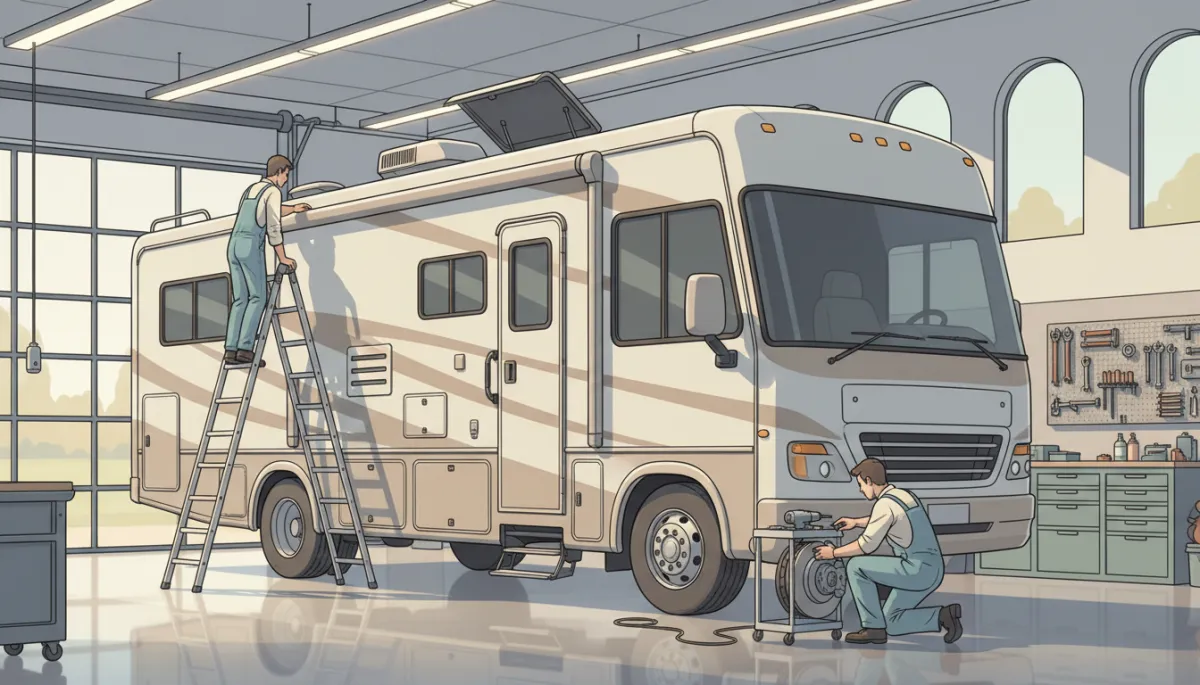
A full seasonal inspection catches small issues before they become trip-ending problems.
Roof Inspections: Your First Line of Defense Against Water Damage
The roof is one of the most critical—and most overlooked—areas on an RV. A tiny crack around a vent or seam can allow water to seep in for months before you notice soft spots in the ceiling, bubbling wall panels, or moldy odors. By then, repairs can be extensive and costly.
How Often to Inspect Your RV Roof
Visual check: Every 60–90 days, or before and after long trips, walk the roof (if it’s designed for that) or carefully inspect from a ladder. Look for cracks, gaps, loose sealant, discoloration, or punctures from branches or debris.
Professional inspection: At least once a year, have a qualified RV technician thoroughly inspect and reseal as needed. They can spot early signs of failure that are easy to miss from ground level.
Warning Signs Your Roof Needs Service
Soft, spongy spots on the roof or inside ceiling panels
Stains, discoloration, or bubbling wallpaper on walls or ceilings
Musty or moldy odors, especially after rain
Visible cracks, peeling sealant, or loose roof components
⚠️ Warning: Roof leaks rarely fix themselves. If you suspect water intrusion, schedule a professional inspection immediately to limit structural damage and mold growth.
Brake Inspections: Stopping Power You Can Trust
RVs are heavy, and many towables rely on electric or hydraulic brakes to assist the tow vehicle. If those brakes are worn, out of adjustment, or not receiving proper power, your stopping distance can increase dramatically—especially in wet conditions or on steep grades common in many camping areas.
How Often to Service RV Brakes
Quick check: Before each trip, confirm your brake controller is functioning, and perform a low-speed brake test in a safe area to feel for pulling, grinding, or delayed engagement.
Professional inspection: At least annually, or every 12,000 miles, have a technician inspect brake pads/shoes, drums or rotors, wiring, magnets, and brake fluid (for hydraulic systems).
Warning Signs Your Brakes Need Attention
Grinding, squealing, or scraping noises when braking
RV or tow vehicle pulls to one side under braking
Noticeably longer stopping distances or “spongy” brake feel
Burning smell from wheels after descending hills
Tires and Bearings: Keeping You Rolling Safely
Tires and wheel bearings work together to support your RV’s weight and keep it moving smoothly. Neglect either one, and you risk blowouts, wheel separation, or axle damage—problems that can be dangerous and extremely expensive to repair.
Tire Maintenance and Replacement Intervals
Pressure checks: Check tire pressure when cold before every trip and at least monthly during storage. Underinflated tires run hotter and are more likely to fail at highway speeds.
Tread and sidewall inspection: Look for uneven wear, cracks, bulges, or exposed cords. UV exposure and age can damage RV tires long before the tread wears out.
Replacement timing: Many RV experts recommend replacing tires every 5–7 years regardless of tread, sooner if you see cracking or signs of damage. A professional can help you evaluate your specific tires and usage.
Bearing Service: Small Parts, Big Consequences
Service interval: For many travel trailers and fifth wheels, wheel bearings should be cleaned, inspected, and repacked with fresh grease every 12 months or 12,000 miles. Always confirm your manufacturer’s recommendations.
Warning signs: Excessive heat at the hub (you can carefully feel near the wheel after driving), grinding noises, visible grease leakage, or wobble in the wheel when jacked up all indicate the need for immediate service.
💡 Pro Tip: Combine tire, brake, and bearing service into one appointment. A coordinated inspection ensures all three systems are working together safely before your next big trip.
Slide-Outs: Protecting Seals, Mechanisms, and Interior Space
Slide-outs add valuable interior room, but they also introduce moving parts, seals, and potential leak points. Regular care keeps them operating smoothly and prevents water damage around the openings.
Slide-Out Maintenance Frequency
Visual checks: Inspect slide seals, wiper blades, and the top of the slide for debris before extending or retracting—ideally every time you move the RV or change campsites.
Lubrication: Use manufacturer-approved lubricants on slide mechanisms and seals several times per season, or more often if you travel frequently or in dusty conditions.
Professional alignment and inspection: If you notice binding, uneven extension, or gaps in seals, schedule a service visit promptly to avoid further damage.
Warning Signs of Slide-Out Trouble
Jerky, noisy, or uneven movement when extending or retracting the slide
Visible gaps in seals or daylight showing through around the slide edges
Water stains or dampness near the slide opening after rain
Generators: Reliable Power Wherever You Park
Your generator powers air conditioning, outlets, and appliances when you’re off-grid or during power outages. Like any engine, it needs regular exercise and service to stay reliable. Letting a generator sit unused for long periods is one of the quickest ways to shorten its life.
How Often to Run and Service Your RV Generator
Exercise routine: Most generator manufacturers recommend running the generator at least once a month for 30–60 minutes under a moderate load (such as the air conditioner). This keeps internal parts lubricated and helps prevent fuel system issues.
Oil and filter changes: Follow hour-based service intervals, often every 100–150 hours of use or annually, whichever comes first. A professional can track hours and perform full generator tune-ups.
Warning Signs Your Generator Needs Service
Hard starting, stalling, or surging under load
Unusual noises, vibrations, or smoke from the exhaust
Tripping breakers or inconsistent power to appliances
Plumbing Systems: Fresh, Gray, and Black Water Care
Your RV’s plumbing systems deliver clean water, remove waste, and support everyday comfort. Freezing, leaks, and neglect can quickly turn into unpleasant odors, damaged cabinets, or even structural issues if water seeps into floors and walls.
Routine Plumbing Maintenance Schedule
Fresh water system: Sanitize at least once or twice a year, especially after long periods of storage. Inspect hoses, fittings, and the water pump for leaks or unusual noises regularly.
Water heater: Drain and flush sediment annually; inspect the anode rod (if equipped) and replace as needed to protect the tank from corrosion.
Gray and black tanks: Use appropriate chemicals, flush thoroughly when dumping, and avoid leaving valves open at full-hookup sites to prevent solid buildup and clogs.
Plumbing Warning Signs You Shouldn’t Ignore
Persistent sewer odors inside the RV, even after dumping tanks
Soft or discolored flooring near sinks, toilets, or the shower
Drips, moisture, or staining inside cabinets or storage bays
⚠️ Warning: Even small plumbing leaks can cause major damage over time. If you see or smell signs of moisture, have a professional trace and repair the issue quickly.
HVAC Systems: Heating and Cooling for Year-Round Comfort
Your RV’s air conditioner and furnace work hard to keep you comfortable in changing weather. Dust, debris, and lack of maintenance can reduce efficiency, increase energy use, and shorten component life. In extreme temperatures, a failing HVAC system can even create safety concerns for people and pets inside the RV.
HVAC Maintenance Timeline
Air conditioner: Clean or replace filters several times each season, especially in dusty environments. Have coils, electrical connections, and refrigerant levels checked by a professional annually or if cooling performance drops.
Furnace: Inspect vents and exhaust outlets for obstructions before each cold season. Schedule a professional cleaning and safety inspection every year or two, particularly if you use the furnace heavily.
HVAC Warning Signs
Weak airflow, unusual noises, or frequent cycling on and off
Burning, chemical, or fuel odors when the system runs
Inconsistent temperatures or hot/cold spots inside the RV
💡 Pro Tip: Plan HVAC service before peak seasons. Spring is ideal for air conditioner checks, while early fall is perfect for furnace inspections.
When to Schedule Professional RV Inspections
While many RV owners handle simple tasks like checking tire pressure or cleaning filters, certain inspections and repairs are best left to experienced technicians with the right tools, training, and equipment. Knowing when to bring your RV to a professional shop protects your safety and your investment.
Ideal Times to Book a Professional Service Appointment
Annually: Schedule a comprehensive inspection once a year that covers roof, brakes, tires, bearings, slide-outs, generator, plumbing, and HVAC systems. This creates a baseline and catches emerging issues early.
Before major trips: If you’re planning a long cross-country journey, mountain travel, or towing at or near your RV’s weight limits, a pre-trip inspection provides peace of mind and helps prevent breakdowns far from home.
After buying a used RV: Even if the previous owner provides records, having a trusted shop perform a full inspection ensures you know exactly what you’re working with and can prioritize any necessary repairs or upgrades.
Situations That Call for Immediate Professional Attention
Sudden changes in braking performance, steering feel, or stability while driving or towing
Evidence of water leaks, roof damage, or soft floors and walls
Electrical issues, burning smells, or tripped breakers that you cannot easily trace to a simple cause
📌 Key Takeaway: If a problem affects safety, structural integrity, or complex systems like brakes, generators, or HVAC, don’t guess—book a professional inspection as soon as possible.
Keep Your RV Trip-Ready with Complete RV Service & Body Shop in St. Charles, Missouri
Staying on top of preventative and seasonal maintenance doesn’t have to be overwhelming. When you partner with an experienced RV service center, you gain a team that understands how all the systems in your coach or trailer work together—and how to keep them performing at their best. From routine roof inspections and brake checks to generator tune-ups, plumbing repairs, and HVAC service, a trusted shop can build a maintenance plan tailored to how and where you travel.
If you’re in the St. Charles, Missouri area or traveling through the region, Complete RV Service & Body Shop is ready to help you protect your RV and your peace of mind. Their technicians work on all major RV systems, from tires, brakes, and bearings to slide-outs, generators, plumbing, and HVAC. Whether you need a simple seasonal inspection or help diagnosing a stubborn leak or electrical issue, they can provide thorough, professional service in a clean, well-equipped facility.
Don’t wait for a breakdown or leak to tell you it’s time for maintenance. Put your RV on a smart service schedule now so your next trip is all about the destination—not the repair shop. Schedule a convenient drop-off appointment with Complete RV Service & Body Shop in St. Charles, Missouri and let their team perform the inspections and preventative maintenance your RV needs. With the right care at the right time, you can enjoy safer travels, fewer surprises, and many more miles of adventure ahead.