Why Pre-Winter Autobody Repairs and Exterior Inspections Protect Your RV Before Missouri Freezes
RV Maintenance, Preventative Care, Service Schedules
Why Pre-Winter Autobody Repairs and Exterior Inspections Protect Your RV Before Missouri Freezes
Addressing exterior panel scratches, collision stress points, and deteriorating sealants in early autumn is the most reliable way to prevent catastrophic structural damage to your coach. When Missouri temperatures drop below freezing, trapped moisture expands rapidly within hidden seams, turning minor cosmetic flaws into expensive structural failures.
Key Takeaways (TL;DR)
Freeze-Thaw Expansion:Water seeping into untreated autobody cracks expands by approximately nine percent when frozen, ripping fiberglass layers apart.
Comprehensive Seam Sealing:Roof transitions, slide-out corners, and corner caps degrade faster than flat panels and require annual elastomeric resealing.
Long-Term Value Protection:Professional collision and body repair completed before winter storage preserves resale value and prevents interior mold buildup.
The Science Behind Cold-Weather RV Body Degradation
Recreational vehicles face harsh environmental stresses during midwestern winters. Unlike passenger vehicles that utilize solid steel unibodies, motorhomes and travel trailers rely on layered composites. These composite structures bond fiberglass exterior skins to luan backing boards, lightweight aluminum framing, and high-density foam insulation.
During spring and summer travels, vibrations from highways, minor brush scrapes, and thermal expansion flex these exterior panels. Tiny micro-fractures often develop along corner moldings, window edges, and cargo compartment doors. When autumn rain arrives in Saint Charles, moisture enters these invisible pathways and settles inside the sub-wall cavities.
Once winter hits, freezing conditions force that trapped water to expand. This hydrostatic pressure shatters the adhesive bonding between the fiberglass skin and the structural backing, a catastrophic condition known as sidewall delamination. ProfessionalRV winterization guide guidelinesemphasize that structural exterior sealing is just as important as draining plumbing lines.
Why Early Autumn Is the Ideal Window for Autobody Repairs
Scheduling professionalautobody repairsand collision corrections in early September offers distinct practical advantages for RV owners across the Greater St. Louis region. First, repair adhesives, body fillers, and high-grade marine sealants cure significantly better in moderate ambient temperatures and controlled indoor humidity.
Second, completing your exterior restoration before putting your rig into storage eliminates the risk of dormant leaks causing widespread interior water damage while the unit sits unattended over the winter months. By resolving scrapes, dented aluminum skirts, and cracked front caps now, your coach remains completely weatherproof.
Key Questions Answered
What causes RV sidewall delamination?
Delamination occurs when moisture penetrates exterior seams, dissolving the glue binding the outer fiberglass skin to interior luan wood panels. Freezing temperatures accelerate this separation, resulting in bubbling or rippled exterior walls.
Can minor gelcoat cracks wait until spring?
No. Gelcoat cracks allow rain and melted snow to enter the underlying fiberglass mesh. Winter freeze-thaw cycles expand these cracks, causing structural spidering and expensive composite delamination.
How often should RV roof and body seams be inspected?
Industry standards recommend professional seal inspections at least twice every year, with late summer or early fall being the most critical pre-storage check.
Common Exterior Damage Requiring Pre-Winter Attention
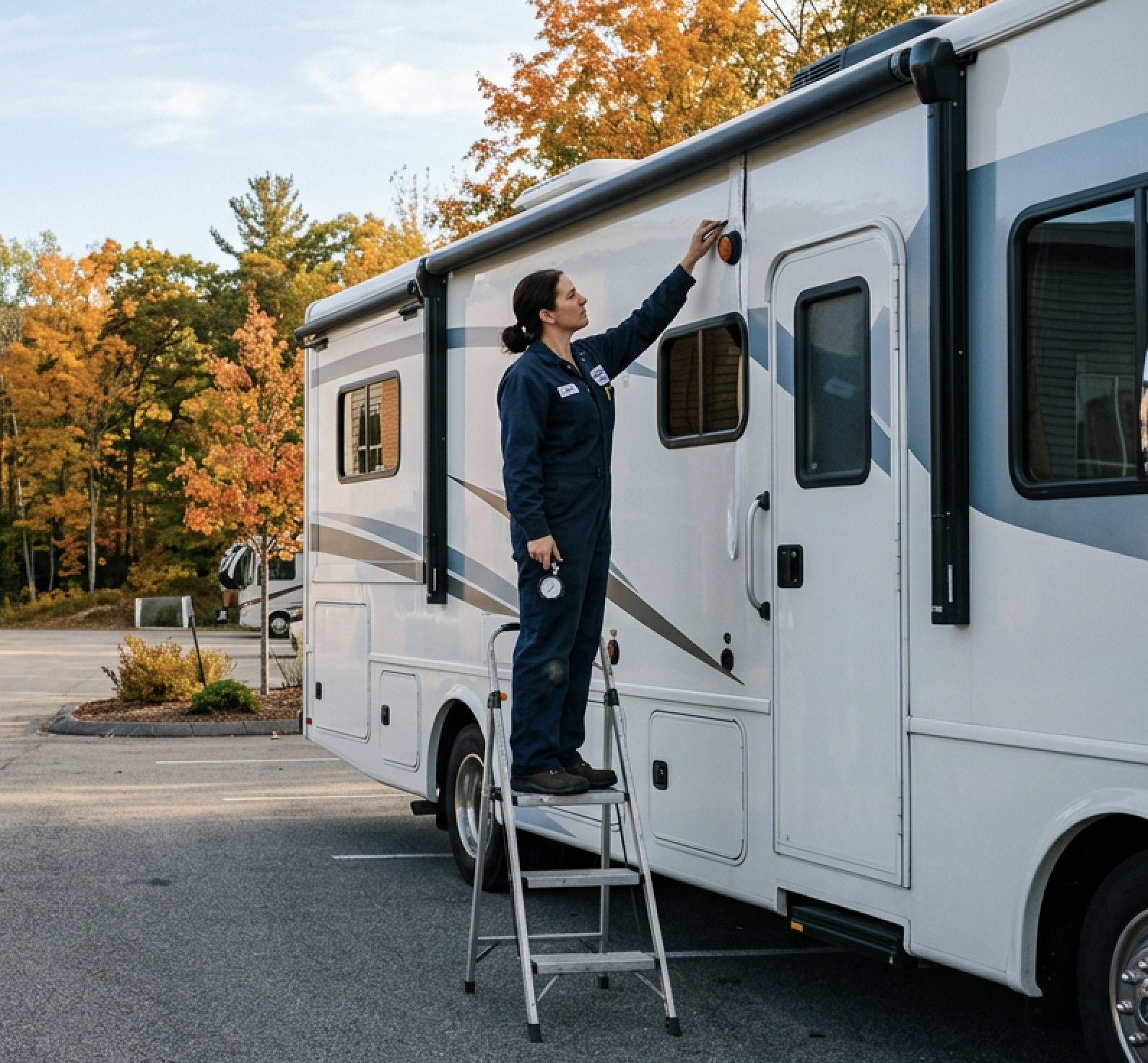
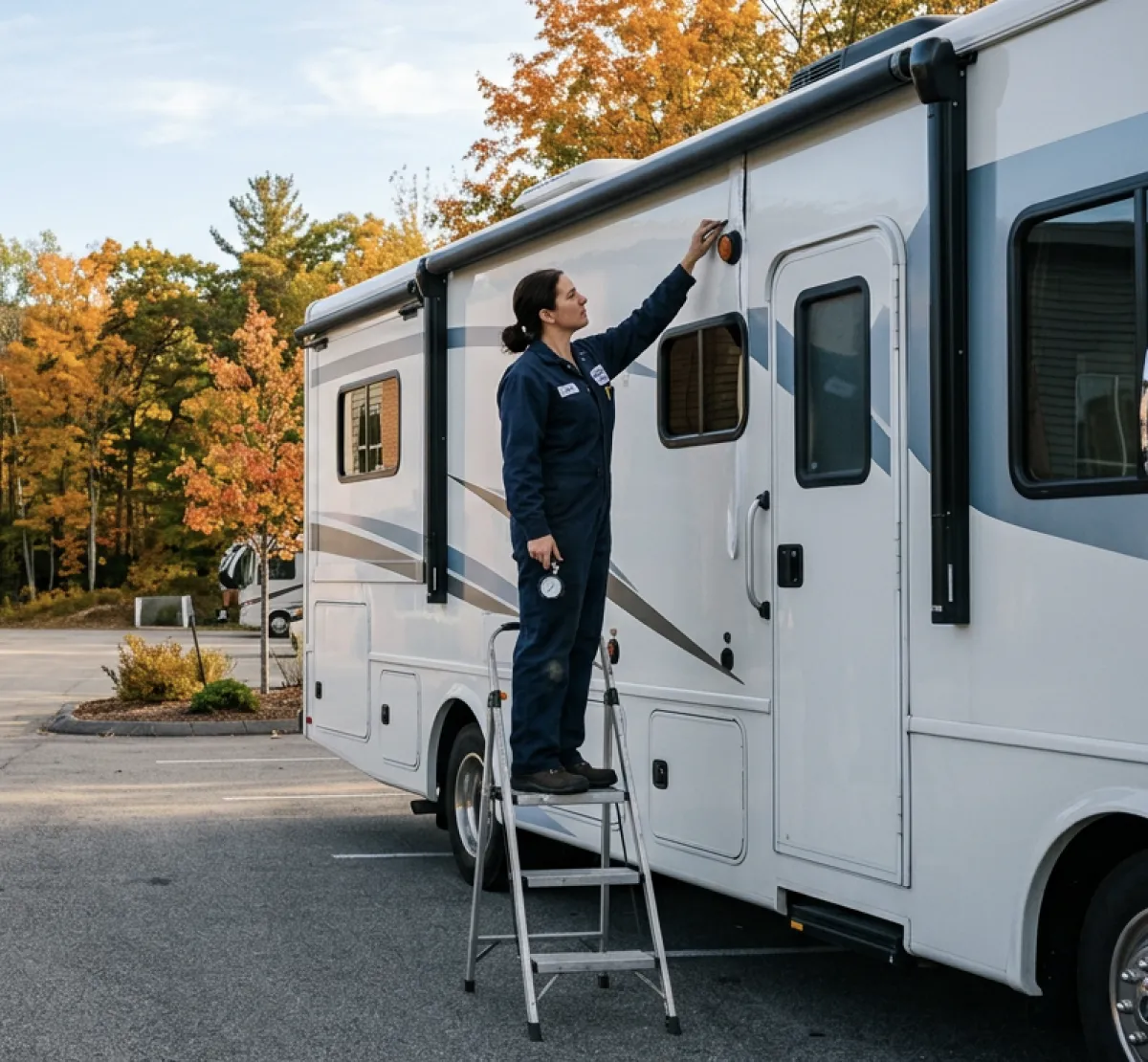
Identifying body defects early prevents minor maintenance from escalating into a full sidewall rebuild. Technicians routinely look for several primary warning signs during autumn checkups:
1. Fiberglass Stress Cracks and Gelcoat Crazing
Stress cracks around slide-out openings, entry doors, and front overhangs occur due to chassis flex over uneven roads. While they may appear cosmetic, moisture will exploit these hairline fractures. Repairing gelcoat surfaces restores UV resistance and water impermeability.
2. Collision Scrapes, Dents, and Corner Cap Fractures
Low-hanging tree branches at campgrounds frequently clip upper roof corners and awning rails. When corner moldings pull away from the body, water flows directly into the ceiling insulation. Professional body alignment and panel refitting ensure zero gaps remain exposed.
3. Deteriorated Lap Sealant and Window Gaskets
Factory sealant around roof vents, skylights, solar mounts, and side windows dries out and cracks over time due to intense summer UV radiation. Re-caulking these joints with self-leveling and non-sagging sealants creates an impenetrable moisture barrier.
Tailored Solutions for Different RV Classes and Budgets
Every RV style requires a specialized approach to exterior body care and collision restoration:
Class A and Class C Motorhomes:Focus heavily on one-piece fiberglass front and rear caps, slide-out hydraulic compartment seals, and full-body paint blending.
Travel Trailers and Fifth Wheels:Require precise inspection of front rock guards, roof-to-sidewall radius joints, and lower aluminum skirting seams.
Camper Vans and Class B Units:Emphasize corrosion treatment around modified roof cutouts, window flares, and rear door hinge seals.
Budget-Conscious Preventative Maintenance:Spot-sealing vulnerable transitions and treating surface scratches provides strong protection when full resprays are not immediately required.
Professional Collision Restoration vs. Quick DIY Patches
While temporary silicone caulk or adhesive tape might seem convenient for quick fixes, silicone does not properly adhere to modern RV TPO roofing or specialized automotive clear coats. When silicone fails, moisture becomes trapped underneath the patch, accelerating rot silently.
Certified body technicians utilize specialized prep techniques, professional adhesion promoters, structural epoxy bonding, and climate-controlled paint booths to deliver permanent, factory-grade repairs. Benchmarks established acrossseasonal winterization benchmarksconsistently show that professional repairs yield longer structural lifespans and better resale retention.
Frequently Asked Questions About RV Autobody Repairs
How long do professional RV body repairs typically take?
Minor fiberglass repair, seam resealing, and spot paint work typically take 2 to 4 days. Extensive collision repair requiring custom panel fabrication or insurance approval may take 1 to 2 weeks.
Does insurance cover seasonal storm and branch damage?
Yes, comprehensive and collision RV insurance policies typically cover damage caused by fallen tree limbs, road debris impacts, hailstorms, and campground collisions.
What is the difference between automotive body repair and RV body repair?
RV body repair requires specialized knowledge of fiberglass composites, vacuum-bonded sandwich walls, rubber TPO membranes, and oversized commercial paint booths not available in standard auto body shops.
Can hail damage on an RV roof lead to structural failure?
Yes. Hail stones can puncture roof membranes or crack fiberglass skylights, allowing rain and snow to seep into roof decking and rot ceiling trusses during winter months.
Why Choose Complete RV Service & Body Shop in Saint Charles, MO
When protecting your recreational vehicle against winter elements, experience matters. Serving Saint Charles, Missouri and the surrounding communities, Complete RV Service & Body Shop provides comprehensive repair and collision solutions under one roof.
Our skilled technicians handle everything from fiberglass reconstruction, structural frame alignment, and precision paint matching to roof seam resealing, general coach maintenance, and secure storage solutions. We treat every rig with master-level craftsmanship to ensure your travels remain safe, comfortable, and reliable season after season.
Protect Your RV with Confidence This Fall
Preparing your motorhome or trailer for the coming winter requires more than just draining pipes—it demands a sound, watertight exterior shell. Taking care of exterior imperfections, panel damage, and joint degradation before freezing temperatures settle over Saint Charles, MO ensures you avoid expensive springtime surprises. Investing in high-quality body repairs today guarantees peace of mind all winter long.
Conclusion
Protecting your RV means protecting your freedom to travel. In a market where value exchange is scrutinized more than ever, the most valuable thing you can do is maintain the quality of the vehicle you already own. Complete RV Service & Body Shop is dedicated to helping Saint Charles residents stay on the road safely and affordably. Don't wait for a breakdown—schedule your 2026 maintenance check today.